Monday, 30 April 2018

SSIF: Vision 2 Provision Conference

36 Havering Schools cake together to review the progress so far of our new Vision to Provision programme for Early Years leaders and settings.

What is the rationale for V2P?
Havering data shows that Expected outcomes are strong and improving. However Exceeding outcomes - particularly with Communication - are significantly behind. 

How did this session help?
The aims of this season were:
  • to share with HTs and their EYFS leads the tweaks that have been made to approaches in their settings this year and the impact they have had
  • give HT support with interpretating their EYFS data and being able to provide challenge and support for their EYFS leads
  • look ahead to 2018-19 and how we can develop the programme further to meet the needs of Havering settings
Julie Fisher - Who Leads The Learning?
Julie Fisher then led the remainder of the day, exploring how adult/child interactions can be made more effective. 

I have been inspired by each session on the V2P course and think it has been a great source of knowledge, understanding and ideas for leadership. I particularly enjoyed Julia Fisher's talks and found them very inspirational!

From my perspective I think the course has been perfectly pitched. It has had a significant impact on me as a Head with no expertise in EYFS, in terms of strengthening and developing my understanding and as a consequence facilitating a much stronger relationship between senior leaders and Early Years. It has really helped us to further shape and refine our vision for our EYFS setting.

I think it has helped our EYFS lead to feel more secure in her leadership abilities. The programme has provided her with the opportunity to reflect on her practice and the practice of others.

We look forward to welcoming EYFS Leads back for the final session of the year on June 8th @ Mead Primary.


NELI Training Day 1

Mead Primary hosted the first day of the NELI Training as our launch phase of the project progresses.

First the Teaching Assistants will learn how to deliver the intervention. This involves:
  • three weekly group sessions of 20-30mins
  • two individual sessions for each pupil per week
Using stimulus cards, the TAs will support the children in extending their narrative ability. By providing simple clear guidance on how to scaffold a narrative, we aim to improve the pupils’ attainment across Listening & Attention, Understanding and Speaking.

The feedback from the training has been extremely positive:
A very well run training session that means I am very confident I will be able to deliver this in school

The resources and manual are really helpful. Often we are left to plan dna resource interventions ourselves - this is so much clearer

Our trainer - Sarah - really made me think about the way we speak to the children and model language. This intervention will help the whole setting

100% agreed that they would be confident at starting the intervention
100% agreed that they understood the aims of the SSIF project

We now can’t wait to see the impact that the NELI resources will have! 


NELI Resources

This morning the delivery man dropped off the boxes for the Nuffield Early Literacy Intervention (NELI).

Without the funding from the SSIF, Havering schools would not be able to afford either the resources or the training that will make such a difference to our Early Years pupils.

We aim to diminish the difference in communication outcomes so that Havering produces more Exceeding pupils - particularly those from disadvantaged backgrounds.

Included in the pack is:
  • a manual of the program so that Teaching Assistants don’t have to plan, only prepare their sessions
  • all of the flash and prompt cards
  • a teddy hand puppet
The resources and scheme look really engaging. I am confident that the simple framework that it provides for improving talk and conversations will have a real impact on our pupils. 
J Mackman


Strategic School Improvement Launch Event

All 15 schools who will be part of the Havering SSIF bid attended the Launch Event this month. The intention was to ensure that HTs, Governors and EYFS Leads were all aware of the key priorities of the project and how it would be delivered.

In partnership with ELKAN, Oxford University Press, the Department for Education, Havering Education Services (HES) and Broadford Primary, the project will reach over 2,000 children between now and July 2019.

Step 1: Launch the event to HTs, Governors and EYFS Leads
Step 2: Train the Teaching Assistants in the delivery of the intervention
Step 3: Launch the programme in schools and collect baseline data
Step 4: Train the SLEs in their role of support and challenge for wider adoption of the principles
Step 5: SLEs to get into schools and provide ongoing weekly support as pupils progress through the NELI intervention.

A really clear project. I understand the aims and believe that this will really be of use to our setting.

The support from the SSIF is amazing. Our CPD budget is limited. Without this funding we wouldn't be able to participate.

We now look forward to getting the training underway and seeing the intervention in the classroom


Monday, 23 April 2018

Make an Impact!

How can you differentiate yourself at work from the rest of the leaders?
There are three things people notice that can help or hinder you in setting yourself apart: 
  1. your attitude
  2. how you treat others
  3. how you act when you think no one is watching. 
Keep people informed.
No one likes chasing people or information. Do everyone a favor and update them often. People often think they should wait to communicate when a task is finished or they have specific information. When you let people know what's happening--even if it means saying you don't know--you're saving them from speculation, distraction, and rumors. A simple status update can buy a lot of peace of mind.

Become a forecaster.
Keep your thinking a step ahead of the rest. If everyone is worrying about today's problems, think about tomorrow's solutions. Don't wait for things reactively; instead, be responsive to issues and trends before there's a problem. It comes down to paying attention to the people and problems you're dealing with and noticing patterns or potential pitfalls. We've all had moments when we know we could have done more. Long before you get to that moment, come up with a plan and set it in motion.
Have confidence to speak up.
Have you ever sat in a meeting where there were only two people doing all the talking? If you want to make an impact, be willing to speak up and speak out. Share what you know and let others know how you can be supportive and helpful.
Do things (the right things) without being asked.
Never ask, "Is there anything I can do?" Just look around and find something useful to do. Making an impact means seeing what needs to get done and taking the initiative to make sure it happens. Try to do something every day that no one asked you to do.
Be a great listener.
Most people think that making an impact is all about what you say and do. Often overlooked is another important way you can leave your mark--by becoming a great listener. Pay attention to what people say. Listen to understand and focus on the speaker instead of thinking ahead to your reply.

Have a positive mindset.
Whether you're just starting out in your first job or are leading a team of your own, remember that people gravitate toward those who have a positive attitude. It's the person who takes on every task--even the most tedious--with enthusiasm and joy who truly stands out. If you view everything through a negative lens then you're likely to have a negative mindset, but if you cultivate a positive attitude it will take you far.


Sunday, 22 April 2018

Equality & Diversity in Film

According to BBC analysis, Hollywood is failing women when it comes to representing gender on screen.

Did you know that fewer than half of the 89 films named best picture at the Oscars have passed a common measure of on-screen female representation known as the Bechdel Test.

A movie passes the Bechdel Test if: 
  • there are at least two named female characters 
  • that they have a conversation with one another about something other than a man.
This conversation needs to happen just once for it to pass.

The research also shows that a greater percentage of best picture winners passed the Bechdel test in the 1930s compared to the current decade.

Recent winners such as Moonlight, Gladiator and Slumdog Millionaire all fail the test, along with two of this year's best picture nominees, teams from BBC 100 Women and More or Less have found.

Darkest Hour fulfils the requirement to have two named female characters but at no point in the film do women have a conversation with each other about something other than a man.

Dunkirk, set during World War Two, doesn't have any named female characters.

Thursday, 19 April 2018

Improvement Facilitator Training

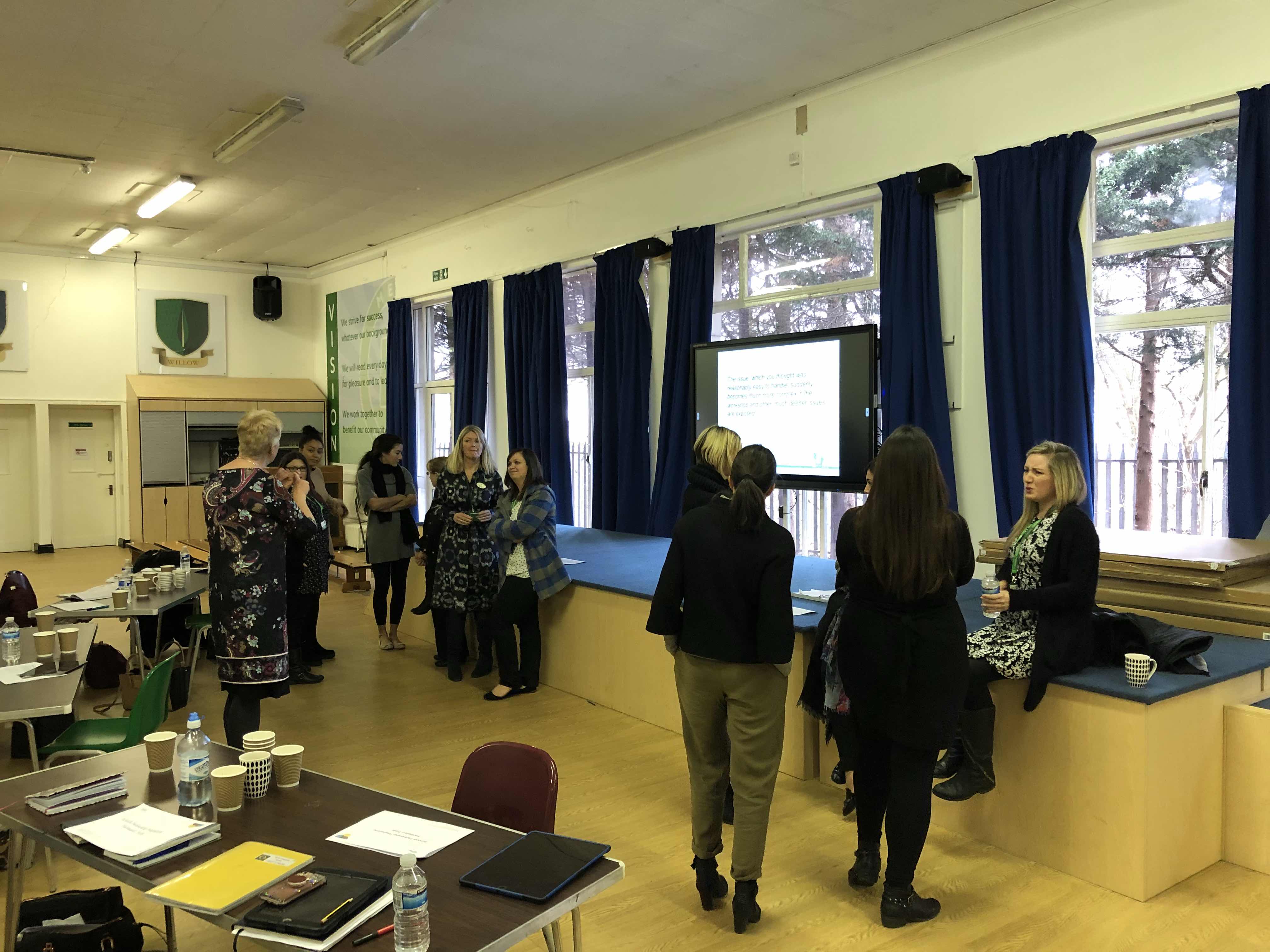
We were delighted to welcome Maggie Farrar (from Educational Development Trust) to Mead Primary as we continued our journey with implementing a Peer Review process in Havering. Over 10 schools were represented with 16 Improvement Facilitators benefitting from the training.

Improvement Facilitators are key in helping schools unpick the findings of their Peer Review and creating their own action plan to support the cycle of school led continuous improvement.

A really insightful session. I now feel much more prepared to take on leading the workshops.

The toolkits are very straightforward. I can see that you would quickly become confident at applying them in different contexts.

I left feeling really inspired and can't wait to lead my first workshop!